

Introduction
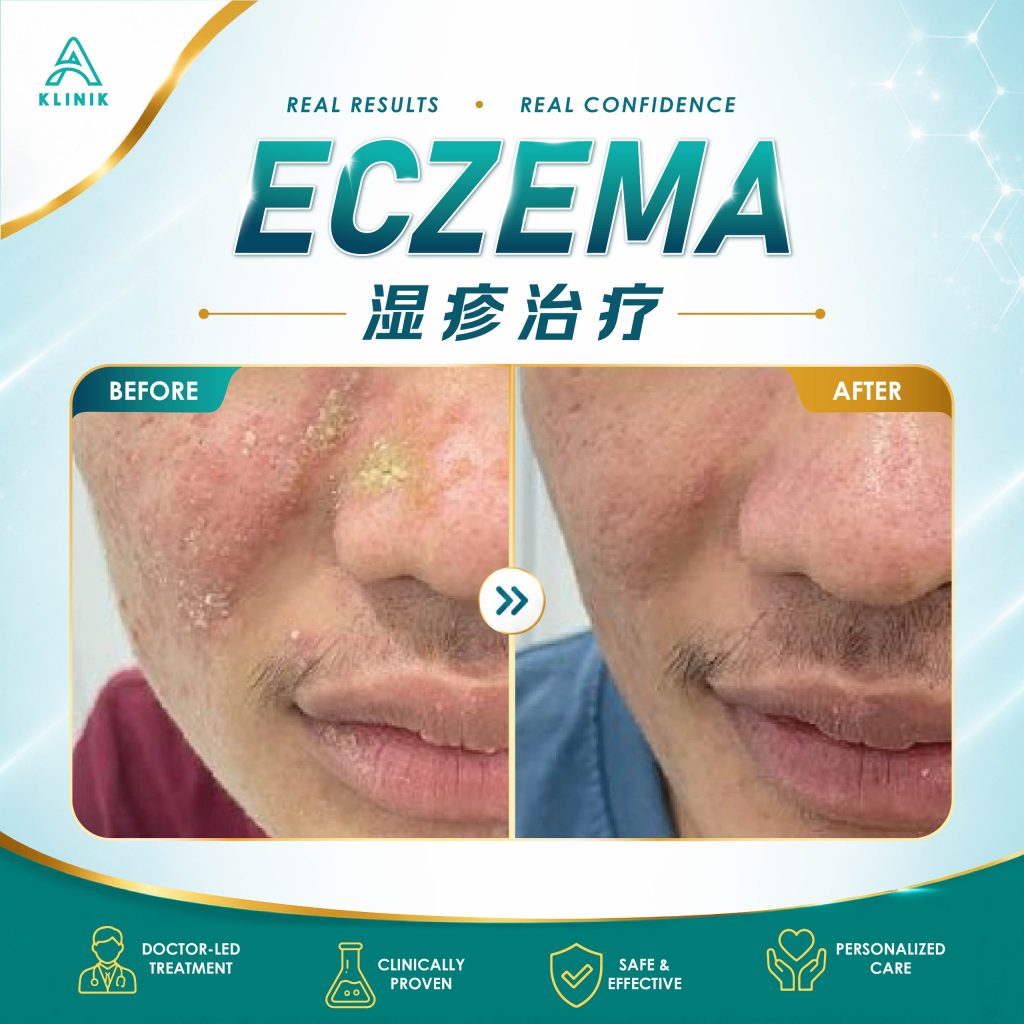
Eczema is more than just dry or itchy skin. For many people, it is a chronic inflammatory skin condition that causes recurring flare-ups, persistent discomfort, poor sleep, visible skin changes, and frustration.
Constant scratching, dry and flaky skin, painful cracks, red and inflamed patches, and the need to avoid personal eczema triggers can significantly affect daily life, work, confidence, and emotional well-being.
Although many people try over-the-counter creams, home remedies, or different skincare products, eczema often requires a proper eczema diagnosis and personalised medical treatment to achieve better long-term control.
Using the wrong product may irritate eczema-prone skin, worsen inflammation, or delay treatment. Some rashes that look like eczema may actually be fungal infections, psoriasis, contact dermatitis, hives, heat rash, or another skin condition that requires a different approach.
If you are searching for eczema treatment in Penang, PJ, KL & Selangor, an eczema clinic in Penang, PJ, KL & Selangor, a skin clinic for eczema, or an experienced doctor for eczema, choosing a proper medical clinic that focuses on evidence-based eczema care can make a meaningful difference.
At A Klinik Medical, we provide professional eczema consultation in Penang, PJ, KL & Selangor, medical assessment for eczema, personalised eczema treatment plans, and long-term eczema management for suitable patients of different ages.
Our goal is to help relieve eczema itching, calm irritated skin, reduce inflammation, support skin barrier repair, manage personal triggers, and reduce the frequency of future flare-ups.
What Is Eczema?
Eczema, also known as atopic dermatitis or atopic eczema, is a chronic inflammatory skin condition that causes the skin to become dry, itchy, sensitive, red, rough, and easily irritated.
It is closely associated with a weakened or damaged skin barrier.
A healthy skin barrier helps retain moisture while protecting the body from irritants, allergens, bacteria, and environmental triggers. In people with eczema-prone skin, the barrier may not work as effectively. This allows moisture to escape and irritants to enter more easily.
As a result, the skin may become:
- Dry and sensitive
- Red and inflamed
- Rough or flaky
- Intensely itchy
- Cracked or painful
- More vulnerable to irritation and infection
Eczema can affect people of all ages, including infants, children, teenagers, and adults.
Some patients develop eczema in babies or childhood eczema, while others experience adult-onset eczema later in life. Adult eczema may affect the face, neck, hands, elbows, knees, or other areas of the body.
Unlike a temporary skin rash, eczema tends to come and go in cycles.
During an eczema flare-up, symptoms may become intense. At other times, the skin may improve and appear almost normal.
Although eczema cannot always be permanently cured, personalised eczema treatment, daily skincare, skin barrier protection, trigger avoidance, and regular follow-up can often help control symptoms and support long-term skin health.可以给我link ?
Common Symptoms of Eczema
Eczema symptoms vary from person to person.
Some patients experience mild eczema affecting a small area, while others develop severe eczema involving larger parts of the body.
Common symptoms include:
- Persistent itching
- Chronic itchy skin
- Dry and itchy skin
- Dry, rough, or flaky skin
- Red and inflamed skin
- Cracked skin
- Painful cracked skin
- Sensitive or irritated skin
- Recurring itchy rash
- Thickened skin from repeated scratching
- Small bumps
- Weeping eczema
- Oozing eczema
- Swelling
- Darkened skin after inflammation
- Eczema pigmentation
- Post-inflammatory pigmentation from eczema
- Eczema affecting sleep
Eczema may appear on different parts of the body, including:
- Eczema on the face
- Eczema on the hands
- Eczema on the neck
- Eczema inside the elbows
- Eczema behind the knees
- Eczema on the arms
- Eczema on the legs
- Eczema on the body
The itch associated with eczema can become especially intense at night.
Severe itching at night may interfere with sleep, reduce concentration during the day, and increase the likelihood of scratching.
Repeated scratching can further damage the skin barrier, worsen inflammation, cause bleeding, create open wounds, and increase the risk of bacterial skin infection.
This cycle is sometimes called the itch-scratch cycle.
Managing the itch early is therefore an important part of eczema symptom control.
Why Is Eczema Worse at Night?
Many patients notice that eczema itching becomes worse at night.
This may be related to several factors, including:
- Increased awareness of itching when there are fewer distractions
- Changes in body temperature
- Dry bedroom air
- Sweating during sleep
- Contact with irritating bedding or fabrics
- Reduced skin moisture
- An active eczema flare-up
- Scratching while asleep
Eczema sleep management may involve improving bedroom temperature, using suitable fabrics, applying moisturiser as advised, and following the doctor’s treatment plan.
If eczema repeatedly affects sleep, it is advisable to seek medical care for eczema rather than relying only on home skincare.
What Causes Eczema?
Eczema does not have one single cause.
It usually develops because of a combination of genetic, environmental, immune system, and skin barrier factors.
Some people are born with skin that is more likely to lose moisture and react to irritants.
A family history of eczema, asthma, hay fever, or allergies may also increase the likelihood of developing eczema.
Common eczema triggers include:
- Dry skin
- Dust mites
- Pet dander
- Pollen
- Hot weather
- Humid weather
- Cold and dry climates
- Sudden weather changes
- Stress
- Harsh soaps
- Strong cleansers
- Fragranced skincare products
- Certain skincare ingredients
- Certain fabrics such as wool
- Sweat
- Heat
- Workplace chemicals
- Cleaning products
- Environmental irritants
- Allergens
- Bacterial skin infections
Eczema and Malaysia’s Hot, Humid Weather
Eczema in Malaysia can be affected by the country’s hot and humid climate.
Heat and sweating may irritate the skin, especially around the neck, elbows, knees, body folds, and areas covered by tight clothing.
Some patients experience:
- Hot weather eczema
- Sweat-induced eczema
- Eczema caused by heat
- Eczema caused by sweat
- Eczema made worse by humid weather
Sweat contains salts that may sting or irritate damaged skin.
However, excessive air conditioning may also dry the skin and contribute to flare-ups.
Patients may therefore need to balance heat control with regular moisturising and gentle skincare.
Can Stress Cause Eczema?
Stress does not necessarily cause eczema by itself, but it can trigger or worsen flare-ups in some patients.
Stress-related eczema may appear during periods of:
- Heavy workloads
- Poor sleep
- Emotional stress
- Major lifestyle changes
- Examinations
- Family difficulties
- Ongoing anxiety
Stress management may therefore form part of a broader eczema lifestyle management plan.
However, stress should not be assumed to be the only cause. A proper medical assessment is still important.
Can Skincare Products Trigger Eczema?
Yes. Certain skincare products may irritate sensitive or eczema-prone skin.
Possible triggers include:
- Fragrance
- Alcohol-based products
- Harsh exfoliants
- Strong acids
- Retinoids
- Essential oils
- Strong soaps
- Scrubs
- Certain preservatives
- Products containing multiple active ingredients
Patients with eczema should generally use an eczema-friendly skincare routine based on gentle cleansing, suitable moisturising, skin barrier support, and sun protection when appropriate.
A doctor can help determine whether a particular product may be contributing to recurring skin inflammation.
Can Food Trigger Eczema?
Certain foods may be relevant for some patients, particularly selected children with confirmed allergies. However, food is not the cause of every eczema case.
Unnecessary food restriction may lead to nutritional problems, especially in children.
Patients should avoid removing major food groups without proper medical advice or allergy assessment.
Eczema food triggers vary between individuals and should be evaluated carefully rather than assumed.
Baby, Child and Adult Eczema
Eczema may look different depending on age.
Eczema in Babies
Baby eczema or infant eczema may cause red, dry, irritated patches, commonly affecting the cheeks, scalp, arms, legs, or body.
Baby dry and itchy skin should be assessed if:
- The rash spreads
- The baby appears uncomfortable
- Sleep is affected
- The skin becomes wet or infected
- The rash does not improve
- There is fever or poor feeding
Baby eczema treatment in Penang, PJ, KL & Selangor or infant eczema treatment in Penang, PJ, KL & Selangor should be personalised according to the child’s age, skin condition, and medical suitability.
Eczema in Children
Childhood eczema may affect the elbows, knees, neck, hands, or body folds.
Children may scratch frequently, especially at night.
Child eczema treatment in Penang, PJ, KL & Selangor may involve:
- Gentle skincare
- Regular moisturising
- Trigger management
- Prescription treatment when appropriate
- Infection monitoring
- Long-term follow-up
Parents searching for child skin rash treatment in Penang, PJ, KL & Selangor should avoid assuming every rash is eczema because fungal infections, heat rash, allergies, and other conditions may appear similar.
Eczema in Adults
Adults may develop:
- Adult-onset eczema
- Recurring adult eczema
- Facial eczema
- Hand eczema
- Workplace eczema
- Contact eczema
- Stress-related eczema
Adult eczema treatment in Penang, PJ, KL & Selangor depends on the area affected, severity, triggers, occupation, previous treatment, and overall health.
Hand eczema may be particularly difficult to control if the patient frequently uses sanitiser, cleaning products, gloves, chemicals, or water.
When Should You See a Doctor for Eczema?
Many people first attempt to manage eczema using moisturisers or over-the-counter products.
However, medical attention is recommended when:
- Eczema keeps returning despite moisturising
- The itching affects sleep
- The rash interferes with work or daily activities
- Large areas of skin are affected
- The condition is spreading
- The skin becomes painful
- The skin becomes swollen
- The skin starts oozing fluid
- The skin develops yellow crusts
- There is pus
- The skin feels unusually warm
- You develop a fever
- Over-the-counter treatment is no longer effective
- You experience frequent flare-ups
- You are unsure whether the rash is eczema
Early eczema medical treatment can help reduce inflammation before the condition becomes more severe and difficult to control.
Patients searching for when to see a doctor for eczema, when eczema needs medical treatment, or doctor consultation for itchy skin should arrange an assessment if symptoms are persistent, severe, recurrent, or unusual.
How Do You Know if Eczema Is Infected?
Scratching can create small breaks in the skin, allowing bacteria to enter.
Signs of infected eczema may include:
- Increasing pain
- Swelling
- Warm skin
- Yellow crusts
- Pus
- Oozing fluid
- Rapidly worsening redness
- An unpleasant smell
- Fever
- Feeling unwell
- A rash that spreads quickly
Infected eczema may require additional treatment.
Patients with eczema with pus, fever with eczema, painful eczema, swollen eczema skin, or rapidly worsening symptoms should seek medical attention promptly.
Eczema infection treatment may include prescription medication depending on the doctor’s assessment.
How Is Eczema Diagnosed?
Eczema diagnosis usually begins with a detailed professional eczema consultation and skin examination.
At A Klinik Medical, our doctors may assess:
- Your current skin symptoms
- The location of the rash
- How long the condition has been present
- Whether symptoms come and go
- Medical history
- Family history of eczema, asthma, or allergies
- Previous treatments
- Skincare products
- Workplace exposure
- Environmental eczema triggers
- Lifestyle factors
- Possible allergies
- Signs of infection
A medical assessment for eczema is important because several skin conditions can resemble eczema.
These include:
- Fungal infections
- Ringworm
- Psoriasis
- Contact dermatitis
- Skin allergies
- Hives
- Heat rash
- Bacterial infection
- Very dry skin
In some cases, additional investigations may be considered if another condition is suspected or allergies may be contributing.
Eczema or Another Skin Condition: Why Proper Diagnosis Matters
A recurring rash diagnosis should not be based on appearance alone.
Using eczema treatment on a fungal infection may fail to resolve the problem and may sometimes make it worse.
Similarly, antifungal cream will not properly control psoriasis or allergic contact dermatitis.
Eczema vs Dry Skin
Dry skin may feel tight, flaky, or rough, but eczema usually involves inflammation, recurring itching, sensitivity, and flare-ups.
Eczema is not simply severe dryness.
Eczema vs Fungal Infection
A fungal infection may have a defined border, circular shape, peeling edge, or spread to nearby areas.
However, eczema and fungal rash can sometimes look similar.
An examination is necessary to distinguish eczema vs fungal infection or eczema vs ringworm.
Eczema vs Psoriasis
Psoriasis often creates thicker, more clearly defined scaly patches. Eczema is usually more intensely itchy and may appear red, irritated, or weeping.
However, the appearance varies, and proper diagnosis is important.
Eczema vs Contact Dermatitis
Contact dermatitis occurs when the skin reacts to a specific irritant or allergen.
It may be caused by:
- Skincare products
- Hair dye
- Jewellery
- Gloves
- Cleaning agents
- Chemicals
- Fragrances
Avoiding the trigger is an important part of treatment.
Eczema vs Skin Allergy
Eczema can be associated with allergic tendencies, but not every eczema flare-up is caused by an allergy.
A skin allergy may appear suddenly after exposure to a trigger, while eczema is often chronic and recurring.
How Is Eczema Treated?
There is no universal treatment for eczema because every patient’s skin, triggers, medical history, and severity are different.
Treatment is usually personalised according to:
- The severity of eczema
- The areas affected
- The patient’s age
- Current symptoms
- Previous treatments
- Personal triggers
- Signs of infection
- Overall medical condition
A personalised eczema treatment plan may include the following.
Prescription Eczema Treatment
Depending on the patient’s condition, the doctor may prescribe:
- Medicated eczema cream
- Eczema ointment treatment
- Anti-inflammatory treatment
- Treatment for eczema itching
- Treatment for eczema inflammation
- Oral medication in selected cases
- Treatment for infected eczema
Prescription eczema treatment should be used according to medical instructions.
Patients should avoid sharing medication or continuing prescription creams longer than advised without review.
Moisturising and Emollient Therapy
Keeping eczema-prone skin moisturised is a key part of eczema management.
Eczema moisturising therapy and eczema emollient therapy help:
- Reduce dryness
- Improve skin comfort
- Support skin barrier repair
- Reduce cracking
- Protect sensitive skin
- Reduce exposure to irritants
- Support long-term eczema control
The best moisturiser for eczema is not necessarily the most expensive product.
A suitable moisturiser depends on:
- Skin sensitivity
- Severity of dryness
- Area of the body
- Climate
- Patient preference
- Ingredients
- Previous reactions
Some patients may require thicker creams or ointments, while others may prefer lighter formulations.
Eczema-Friendly Skincare
A suitable skincare routine for eczema may include:
- A gentle cleanser
- A soap-free cleanser
- Fragrance-free products
- Regular moisturising
- Lukewarm rather than hot showers
- Avoiding harsh scrubs
- Avoiding unnecessary active ingredients
- Gentle patting rather than rubbing
- Sun protection when appropriate
- Products suitable for sensitive skin
Patients often ask how often they should moisturise eczema.
The answer depends on the condition, but regular moisturising is generally important, especially after bathing and whenever the skin feels dry.
A doctor can provide individual guidance based on the patient’s needs.
Trigger Management
Identifying and avoiding personal triggers plays an important role in long-term eczema control.
Eczema trigger management may include:
- Changing skincare products
- Avoiding harsh soaps
- Using gentler detergents
- Wearing suitable fabrics
- Managing heat and sweat
- Reducing exposure to dust mites
- Reviewing workplace irritants
- Improving sleep
- Managing stress
- Avoiding unnecessary scratching
- Maintaining a consistent skincare routine
Not every trigger can be completely avoided.
The aim is to recognise patterns and reduce avoidable exposure.
Infection Management
If eczema becomes infected because of scratching or skin barrier damage, additional treatment may be required.
The doctor may assess:
- Signs of bacterial infection
- The severity of the infection
- The areas affected
- Whether oral or topical treatment is needed
- Whether follow-up is required
Treating infection is important because infected eczema may worsen quickly.
Long-Term Eczema Care
Managing eczema is usually an ongoing process rather than a one-time treatment.
Long-term eczema care may involve:
- Daily eczema skincare
- Maintenance treatment
- Trigger avoidance
- Skin barrier protection
- Early treatment of flare-ups
- Regular follow-up
- Reviewing treatment response
- Adjusting medication when necessary
- Monitoring for infection
Regular eczema follow-up care allows the doctor to evaluate progress and update the treatment plan.
This can support long-term eczema control and reduce repeated cycles of severe inflammation.
How Can You Prevent Eczema Flare-Ups?
Eczema relapse prevention depends on personal triggers and skin condition.
Helpful steps may include:
- Moisturising regularly
- Using gentle skincare
- Avoiding known irritants
- Managing heat and sweat
- Wearing breathable clothing
- Avoiding very hot showers
- Treating flare-ups early
- Following prescribed treatment
- Avoiding excessive scratching
- Maintaining a comfortable room temperature
- Managing stress
- Attending follow-up appointments
These steps may help reduce eczema flare-ups, but they cannot guarantee that eczema will never return.
Can Eczema Cause Dark Marks?
Yes. Eczema inflammation and scratching may leave darker or lighter areas after the flare-up improves.
This is known as post-inflammatory pigmentation.
Dark skin after eczema may be more noticeable in some skin tones.
Treating inflammation early, avoiding excessive scratching, and protecting the skin from sunlight may help reduce the risk of persistent eczema pigmentation.
Patients should avoid using strong whitening or exfoliating products on active eczema because these may worsen irritation.
How Long Does Eczema Treatment Take?
The duration of eczema treatment varies.
Some mild flare-ups may improve relatively quickly with suitable care, while chronic eczema may require ongoing management.
Treatment duration depends on:
- Severity
- Duration of the condition
- Area affected
- Personal triggers
- Presence of infection
- Treatment adherence
- Skin barrier condition
- Lifestyle factors
- Individual response
Eczema is often managed rather than treated once and forgotten.
A maintenance plan may be necessary to reduce future flare-ups.
Why Patients Choose A Klinik Medical
At A Klinik Medical, we understand that every eczema patient has different symptoms, triggers, medical histories, and treatment goals.
Instead of providing a one-size-fits-all solution, our experienced medical doctors develop personalised treatment plans based on the patient’s skin condition and medical assessment.
Patients searching for eczema treatment in Penang, PJ, KL & Selangor may choose A Klinik Medical for medical assessment, personalised treatment planning and long-term eczema management.
A Klinik Medical provides:
- Experienced medical doctors
- KKM-registered medical clinics
- More than 300,000 patients served across the A Klinik group
- Personalised eczema treatment plans
- Evidence-based medical care
- Professional skin examination
- Treatment for suitable adults and children
- Long-term eczema management
- Comfortable consultation environment
- Transparent consultation
- No unnecessary hard selling
- Follow-up care where appropriate
Our goal is not only to relieve current symptoms.
We also aim to:
- Reduce eczema itching
- Calm irritated skin
- Reduce inflammation
- Support repair of the damaged skin barrier
- Improve eczema symptom control
- Reduce recurring flare-ups
- Lower the risk of infection
- Protect sensitive skin
- Support healthier eczema-prone skin
- Improve sleep affected by eczema
- Improve long-term skin health
If you are looking for eczema treatment in Penang, PJ, KL & Selangor, atopic dermatitis treatment, itchy skin treatment, sensitive skin treatment, or a family skin clinic, a professional consultation can help identify the most suitable next step.
Frequently Asked Questions
1. Can Eczema Be Cured Permanently?
Eczema is generally considered a chronic condition.
It may not always be permanently cured, but the symptoms can often be controlled with appropriate medical treatment, regular moisturising, trigger avoidance, eczema-friendly skincare, and follow-up care.
The aim of long-term eczema management is to reduce inflammation, relieve itching, repair the skin barrier, prevent infection, and reduce the frequency and severity of flare-ups.
2. Is Eczema Contagious?
No. Eczema is not contagious.
It cannot spread from one person to another through touching, sharing food, sleeping in the same room, or physical contact.
However, an infected eczema wound may contain bacteria. Good hygiene and proper medical treatment are therefore important if the skin becomes infected.
3. What Triggers Eczema Flare-Ups?
Common eczema triggers include:
- Dry skin
- Dust mites
- Stress
- Sweating
- Hot weather
- Cold or dry air
- Harsh soaps
- Fragranced skincare products
- Allergens
- Certain fabrics
- Cleaning products
- Workplace irritants
- Skin infections
Triggers vary between patients.
Keeping a simple record of skincare products, environmental exposure, stress, food, weather, and symptoms may help identify patterns.
4. How Do I Know if My Eczema Is Infected?
Possible signs of infected eczema include:
- Increasing pain
- Swelling
- Yellow crusts
- Pus
- Oozing fluid
- Warm skin
- Rapidly spreading redness
- Fever
- Feeling unwell
If you notice these symptoms, seek medical attention promptly.
Infected eczema may require prescription treatment.
5. When Should I Seek Medical Treatment for Eczema?
You should consider medical eczema treatment if:
- Your eczema keeps returning
- The itching affects your sleep
- Over-the-counter products are not helping
- The rash is spreading
- Large areas are affected
- The skin becomes painful or infected
- You are unsure whether the rash is eczema
- Your child is frequently scratching
- Symptoms interfere with daily activities
A proper eczema consultation can help distinguish eczema from fungal infection, psoriasis, contact dermatitis, skin allergy, or another recurring rash.
Conclusion
Eczema is a chronic inflammatory skin condition that can cause dry skin, persistent itching, recurring rashes, painful cracks, sleep problems, infection, and reduced confidence.
Successful eczema management starts with a proper diagnosis.
Because fungal infections, psoriasis, contact dermatitis, allergies, and other skin conditions can look similar to eczema, it is important to avoid relying on guesswork or repeatedly changing products without knowing the underlying cause.
A personalised eczema treatment plan may include prescription medication, eczema moisturising therapy, skin barrier repair, trigger management, infection treatment, eczema-friendly skincare, and long-term follow-up.
Patients searching for eczema treatment in Penang, PJ, KL & Selangor, an eczema clinic, skin clinic for eczema, eczema doctor, atopic dermatitis treatment, recurring eczema treatment, or eczema flare-up treatment should choose a proper medical clinic that provides professional assessment before recommending treatment.
At A Klinik Medical, our experienced medical doctors provide personalised, evidence-based eczema care based on each patient’s symptoms, medical history, triggers, and skin condition.
Our aim is to help relieve symptoms, reduce flare-ups, protect the skin barrier, prevent complications, and support healthier skin in the long term.
Medically Reviewed By Dr. Aaron Low