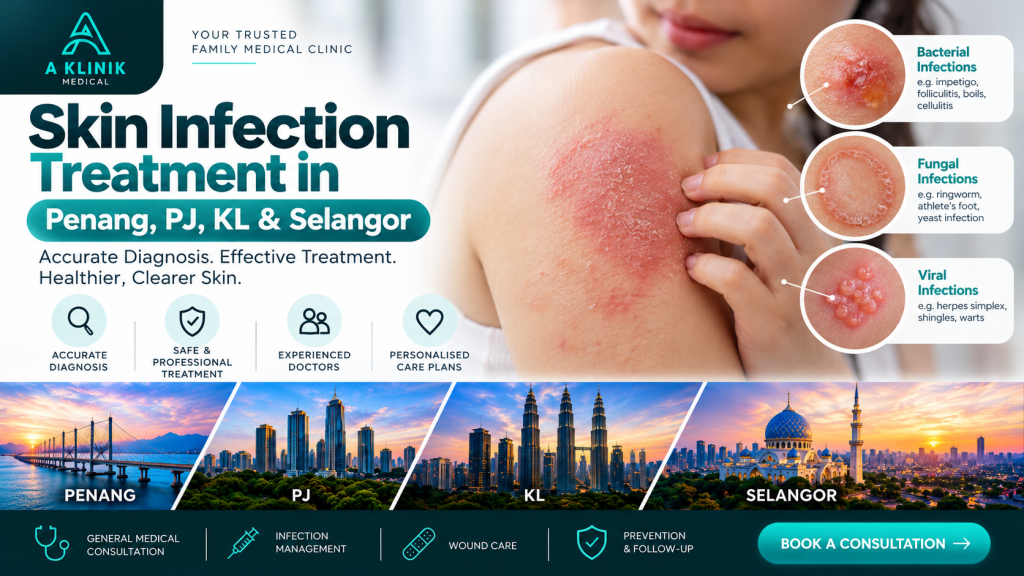


Skin Infection Treatment in Penang, PJ, KL & Selangor: Common Types, Symptoms & When to See a Doctor
Skin infections are common medical concerns that can affect people of all ages. They may begin as a small red patch, an itchy area, a painful lump or a wound that does not seem to heal properly. While some skin infections are mild, others can spread or become more serious if they are not assessed and treated appropriately.
Many patients searching for skin infection treatment in Penang, PJ, KL & Selangor are unsure whether their symptoms are caused by bacteria, fungi, viruses or another skin condition. A red and itchy rash, for example, may be caused by an infection, but it could also be eczema, contact dermatitis or another inflammatory condition.
At A Klinik Medical, our approach focuses on understanding the possible cause of the skin concern before recommending appropriate medical care. This is important because different types of skin infections may require different treatments, and using the wrong medication can sometimes delay improvement.
What Is a Skin Infection?
A skin infection occurs when microorganisms such as bacteria, fungi or viruses infect the skin. The infection may affect the surface of the skin or involve deeper layers and surrounding tissues, depending on the condition.
The skin normally acts as a protective barrier against the environment. However, cuts, scratches, insect bites, irritated skin or other breaks in the barrier may create an opportunity for microorganisms to enter. Some infections can also develop without an obvious wound.
Skin infections can vary considerably in appearance and severity. Some cause mild itching or scaling, while others may produce pain, swelling, pus, blisters or spreading redness.
Because the symptoms can overlap with non-infectious skin conditions, an accurate assessment is an important first step in skin infection treatment.
Common Types of Skin Infections
Skin infections are generally grouped according to the type of microorganism involved. The three major categories are bacterial, fungal and viral skin infections.
1. Bacterial Skin Infections
Bacterial skin infections occur when bacteria infect the skin or surrounding tissues. Common examples include impetigo, folliculitis, boils and cellulitis.
Symptoms may include redness, warmth, tenderness, swelling, pus or crusting, depending on the condition. Some bacterial infections remain localised, while others can spread into deeper tissues.
2. Fungal Skin Infections
Fungal skin infections are caused by fungi that can grow on the skin, scalp or nails. Examples include ringworm, athlete’s foot and certain yeast infections.
These infections often cause itching, scaling, redness or a rash, although the appearance depends on the type and location.
3. Viral Skin Infections
Viral skin infections are caused by viruses and may include conditions such as herpes simplex, shingles and certain types of warts.
They may produce blisters, painful rashes, raised lesions or other characteristic skin changes. Treatment depends on the specific virus and clinical presentation.
Bacterial Skin Infections
Bacterial infections are an important reason patients seek skin infection treatment in Penang, PJ, KL & Selangor. They can develop after a break in the skin or around hair follicles, although the exact cause and severity vary.
Not every bacterial infection requires the same medication. Some may need topical treatment, while others may require oral antibiotics, drainage or further medical assessment.
Impetigo
Impetigo is a contagious bacterial skin infection that is particularly common in children, although adults can develop it as well.
It often begins as small sores or blisters that may rupture and form yellowish or honey-coloured crusts. The infection commonly affects the face, especially around the nose and mouth, but it can occur elsewhere.
Impetigo can spread through direct contact or by touching contaminated items. Scratching may also spread the infection to other areas of the body.
Treatment may involve appropriate topical or oral antibiotics depending on the extent and severity of the infection. A doctor can assess the condition and advise on treatment and measures to reduce transmission.
Folliculitis
Folliculitis is inflammation of the hair follicles and may be caused by bacteria, fungi or non-infectious irritation.
It can appear as small red bumps or pustules around hair follicles and may cause itching, tenderness or discomfort.
Commonly affected areas include:
- Scalp
- Face and beard area
- Chest
- Back
- Buttocks
- Legs
Folliculitis may develop after shaving, friction, sweating or exposure to certain contaminated water sources. However, not every case is bacterial, so treatment should depend on the suspected cause.
Patients with persistent, recurrent or widespread folliculitis may benefit from medical assessment rather than repeatedly using random antibiotic creams.
Boils and Skin Abscesses
A boil is a deeper infection involving a hair follicle and surrounding tissue. It may develop into a painful, swollen lump containing pus.
A skin abscess is a collection of pus that can occur in the skin or deeper tissues.
Symptoms may include:
- Painful swelling
- Redness
- Warmth
- Tenderness
- Pus or drainage
- Increasing size
Some abscesses require drainage by a healthcare professional. Antibiotics alone may not always be sufficient when a significant collection of pus is present.
Patients should avoid squeezing, cutting or attempting to drain a boil at home because this can worsen the infection or cause further injury.
Cellulitis
Cellulitis is a bacterial infection involving the deeper layers of the skin and underlying tissues.
It commonly causes an area of skin to become red, warm, swollen and painful. The affected area may expand over time, and some patients may develop fever or feel generally unwell.
Cellulitis can occur after a cut, insect bite, wound or other break in the skin, although an obvious entry point is not always visible.
Unlike a minor superficial rash, cellulitis can become serious if it spreads. Patients with suspected cellulitis should seek prompt medical assessment, particularly if the redness is expanding or accompanied by systemic symptoms.
Fungal Skin Infections
Fungal infections are another common reason patients search for skin infection treatment.
They often affect warm, moist areas of the body, although some can also involve the scalp, nails or other parts of the skin.
Fungal infections may be confused with eczema or other rashes because both can cause redness, itching and scaling.
This is why identifying the likely cause matters before starting treatment.
Ringworm (Tinea Corporis)
Ringworm is a fungal skin infection, despite its name. It is not caused by a worm.
It commonly produces a circular or ring-shaped rash with a more active, scaly border. The centre may appear relatively clearer, although not every case has the classic ring appearance.
Ringworm can spread through contact with infected people, animals or contaminated items.
Treatment usually involves antifungal medication, but the type and duration depend on the location and extent of the infection.
Using steroid creams without an appropriate diagnosis can sometimes alter the appearance of fungal infections and make them more difficult to recognise.
Athlete’s Foot
Athlete’s foot, also known as tinea pedis, is a fungal infection affecting the feet.
It commonly occurs between the toes but may also affect the soles or other areas of the feet.
Symptoms can include:
- Itching
- Scaling
- Peeling skin
- Redness
- Cracking
- Burning or discomfort
Moisture, sweating and prolonged use of enclosed footwear may contribute to the environment in which fungi thrive.
Appropriate antifungal treatment and measures to keep the feet dry can help manage the condition. Persistent or recurrent cases may require further assessment.
Fungal Infection in Skin Folds
Fungal or yeast infections may develop in areas where moisture and friction are common, such as the groin, underarms or beneath skin folds.
These infections may cause redness, itching, irritation or scaling.
However, not every rash in a skin fold is fungal. Conditions such as irritant dermatitis, eczema or bacterial infections can produce similar symptoms.
Patients should therefore avoid assuming that every itchy rash requires antifungal cream.
Viral Skin Infections
Viral skin infections can produce a variety of symptoms, including blisters, painful rashes or raised skin lesions.
Some viral infections resolve on their own, while others may benefit from antiviral medication or specific medical treatment.
The appropriate approach depends on the virus, the patient’s health and the location and severity of the infection.
Herpes Simplex
Herpes simplex virus can cause recurrent clusters of small, painful blisters, commonly around the lips or other affected areas.
Some patients experience tingling, burning or discomfort before the blisters appear.
The virus can remain dormant in the body and reactivate later, which explains why some people experience recurrent outbreaks.
Antiviral medication may help reduce the severity or duration of an outbreak when used appropriately. Patients with severe symptoms, frequent recurrences or involvement near the eye should seek medical advice.
Shingles (Herpes Zoster)
Shingles occurs when the varicella-zoster virus, which causes chickenpox, reactivates later in life.
It commonly produces a painful rash with blisters, often affecting one side of the body in a band-like distribution.
Some patients experience pain, burning or tingling before the rash becomes visible.
Early medical assessment is important because antiviral treatment may be most beneficial when started promptly. Shingles affecting the face or eye area requires urgent attention because of the risk of complications.
Viral Warts
Warts are caused by certain types of human papillomavirus (HPV).
They may appear as small, rough or raised lesions on the hands, feet, face or other areas of the body.
Although most common skin warts are benign, they can sometimes spread, persist or cause discomfort depending on their location.
Treatment options may include topical medication, cryotherapy or other medical procedures for selected cases.
For a more detailed explanation, patients can read our separate guide on Wart Removal in Penang, PJ, KL & Selangor.
What Are the Common Symptoms of a Skin Infection?
The symptoms of a skin infection depend on the type of infection and the area affected.
Common signs may include:
- Redness
- Swelling
- Warmth
- Pain or tenderness
- Itching
- Scaling
- Blisters
- Pus
- Crusting
- Unusual discharge
- A rash that spreads
- A wound that becomes increasingly painful
Some infections may also cause fever, chills or a general feeling of being unwell.
However, these symptoms are not exclusive to infections. Eczema, allergic reactions and other inflammatory skin conditions can produce similar changes.
Therefore, symptoms should be assessed in context rather than used to make a definite diagnosis at home.
Skin Infection vs Skin Allergy: How Can You Tell the Difference?
One of the most common mistakes is assuming that every red or itchy rash is an allergy.
Skin allergies and infections can overlap in appearance, but they have different causes.
| Feature | Skin Infection | Skin Allergy |
|---|---|---|
| Cause | Bacteria, fungi, viruses or other microorganisms | Immune reaction to an allergen |
| Common symptoms | Redness, pain, warmth, pus, scaling or blisters depending on type | Itching, redness, swelling, rash or hives |
| Contagious? | Some infections can spread | Allergic reactions are not contagious |
| Treatment | Depends on the microorganism and severity | Depends on the allergic condition |
| Diagnosis | Medical assessment, sometimes tests | History, examination and selected allergy testing when appropriate |
For example, a fungal infection may cause an itchy red rash that resembles eczema. A bacterial infection may cause swelling and redness that a patient initially mistakes for an allergic reaction.
This is why skin infection treatment should begin with identifying the likely cause rather than using the same cream for every rash.
Can Eczema Become Infected?
Yes. Eczema itself is not an infection, but damaged or broken skin can sometimes develop a secondary infection.
Patients with eczema may scratch repeatedly because of itching, which can damage the skin barrier. This may increase the risk of microorganisms entering the skin.
Possible signs of secondary infection may include:
- Increasing pain
- New oozing or pus
- Yellowish crusting
- Rapidly worsening redness
- Unusual warmth
- Fever or feeling unwell
However, eczema can also flare without infection, so these signs should be assessed by a healthcare professional.
If an infection is present, treatment may need to address both the infection and the underlying eczema.
Why Diagnosis Matters Before Skin Infection Treatment
Imagine three patients who all have a red, itchy rash.
Patient A has a fungal infection.
Patient B has eczema.
Patient C has a bacterial skin infection.
All three may search online for:
“Skin infection treatment near me.”
But their treatment needs may be completely different.
Using an antifungal cream for eczema may not address the underlying inflammation. Using a steroid cream on certain untreated fungal infections may alter or worsen the condition. Using antibiotics unnecessarily may also contribute to side effects and antibiotic resistance.
This is why at A Klinik Medical, the priority is to assess the skin concern and determine the likely cause before recommending appropriate treatment.
How Are Skin Infections Treated?
The appropriate skin infection treatment depends on the type of infection, its severity, the area affected and the patient’s overall health. A bacterial infection may require a different approach from a fungal or viral infection, and some conditions may need a procedure rather than medication alone.
This is why treatment should begin with an assessment rather than simply choosing a cream based on the appearance of the rash. In some cases, a doctor may be able to make a diagnosis through examination and medical history. In other situations, additional tests may be considered if the diagnosis is uncertain, the infection is recurrent or the condition is not responding as expected.
For patients searching for skin infection treatment in Penang, PJ, KL & Selangor, the goal is to identify the likely cause, select appropriate treatment and monitor whether the condition is improving.
1. Bacterial Skin Infection Treatment
Bacterial skin infections may be treated with topical antibiotics, oral antibiotics or other medical interventions depending on the diagnosis and severity.
A small, localised superficial infection may require a different treatment from cellulitis, which affects deeper skin tissues. Similarly, a boil or abscess containing pus may need drainage rather than relying on antibiotics alone.
The doctor may consider:
- Type of bacterial infection
- Size and location of the affected area
- Whether the infection is spreading
- Presence of pus or an abscess
- Fever or other systemic symptoms
- Previous antibiotic use
- Allergies and medical history
- Risk factors such as diabetes or reduced immunity
Not every bacterial skin infection requires oral antibiotics, and antibiotics should not be used unnecessarily.
Topical Antibiotics for Skin Infections
Topical antibiotics may be prescribed for selected superficial bacterial infections, such as certain cases of localised impetigo.
These medications are applied directly to the affected area and may be appropriate when the infection is limited and the patient is otherwise well.
However, topical antibiotics are not suitable for every skin infection. They may not adequately treat deeper infections, significant cellulitis or a large abscess.
Patients should also avoid repeatedly using leftover antibiotic creams without a diagnosis. Unnecessary antibiotic use can contribute to resistance and may delay appropriate treatment if the underlying condition is fungal, viral or non-infectious.
Oral Antibiotics for Skin Infections
Oral antibiotics may be required for certain bacterial infections, particularly when the infection is more extensive, involves deeper tissues or is associated with systemic symptoms.
For example, cellulitis commonly requires systemic antibiotic treatment. The choice of medication and treatment duration depend on the clinical situation, likely bacteria, local guidance and individual patient factors.
Patients should take prescribed antibiotics according to their doctor’s instructions and should not share medication or use leftover antibiotics from a previous illness.
If symptoms worsen despite treatment, or if the redness continues to spread, further medical assessment may be necessary.
2. Cellulitis Treatment
Cellulitis is a bacterial infection that affects deeper layers of the skin and surrounding tissues. It commonly causes redness, warmth, swelling and pain, and the affected area may gradually expand.
Because cellulitis can become serious, suspected cases should be assessed promptly.
Treatment commonly involves appropriate systemic antibiotics. Depending on the severity, the doctor may also assess whether the patient requires hospital care, intravenous antibiotics or further investigation.
Patients should seek urgent medical attention if they develop rapidly spreading redness, severe pain, high fever, confusion, significant weakness or other signs of serious illness.
Cellulitis should not be treated as a simple cosmetic rash or managed only with random over-the-counter creams.
3. Boil and Skin Abscess Treatment
A boil or skin abscess may develop when an infection causes a collection of pus beneath the skin.
The area may become painful, swollen, red and warm. Some abscesses may drain spontaneously, while others continue to enlarge.
Treatment depends on the size, location and severity of the abscess.
For selected cases, a healthcare professional may need to perform incision and drainage to release the collection of pus. Antibiotics may also be prescribed when clinically indicated, such as when there is surrounding cellulitis, systemic illness or other risk factors.
Patients should not attempt to cut, squeeze or drain an abscess at home. Doing so may worsen the infection, cause additional tissue injury or delay appropriate care.
Can Antibiotics Alone Treat an Abscess?
Not always.
When a significant collection of pus has formed, antibiotics may not be sufficient without appropriate drainage.
This is why a painful, enlarging lump should be assessed rather than repeatedly treated with different creams or oral medications.
The doctor can determine whether the lesion is an abscess, an inflamed cyst, another skin condition or something that requires a different approach.
4. Fungal Skin Infection Treatment
Fungal skin infections are generally treated with antifungal medication rather than antibiotics.
The treatment may involve topical antifungal creams, lotions or other formulations. Certain infections may require oral antifungal medication, particularly when they are extensive, recurrent or affect areas such as the scalp or nails.
The appropriate treatment depends on:
- Type of fungal infection
- Location
- Extent of the infection
- Previous treatment
- Patient’s medical history
- Whether the diagnosis is confirmed or uncertain
For example, a small area of ringworm on the body may be managed differently from a fungal scalp infection.
This is why skin infection treatment should be selected according to the specific condition.
Antifungal Cream for Ringworm
Topical antifungal medication is commonly used for localised ringworm affecting the body.
Treatment usually needs to be continued for the recommended duration, even if the rash begins to improve earlier.
Stopping treatment too soon may contribute to incomplete clearance or recurrence.
Patients should also avoid applying strong steroid creams to an undiagnosed ring-shaped rash. Steroids can sometimes alter the appearance of a fungal infection and make it more difficult to recognise.
If the rash is spreading, recurrent or not improving, medical reassessment may be necessary.
Treatment for Athlete’s Foot
Athlete’s foot is commonly managed with appropriate antifungal medication together with measures to reduce moisture around the feet.
Patients may be advised to:
- Keep feet clean and dry
- Dry carefully between the toes
- Change socks regularly
- Avoid sharing towels
- Allow footwear to dry
- Follow the recommended antifungal treatment duration
If the infection is extensive, recurrent or associated with significant skin breakdown, further assessment may be appropriate.
Patients with diabetes should be particularly cautious about foot wounds or infections and seek medical advice promptly when concerning symptoms develop.
Fungal Scalp Infection Treatment
Fungal infections affecting the scalp may require a different approach from fungal infections on the body.
In many cases, oral antifungal medication is needed because topical creams alone may not adequately treat infection involving the hair shafts or follicles.
A doctor may also consider the patient’s age, medical history and the need for appropriate testing or monitoring.
Patients should not assume that an ordinary anti-dandruff shampoo can treat every fungal scalp infection.
5. Viral Skin Infection Treatment
Viral skin infections require treatment based on the specific virus and clinical presentation.
Some viral infections may resolve without specific medication, while others may benefit from antiviral treatment or procedures.
Antibiotics do not treat viruses unless there is a separate bacterial infection that requires treatment.
This distinction is important because patients sometimes request antibiotics whenever they develop a painful or blistering rash.
Herpes Simplex Treatment
Herpes simplex may cause recurrent painful blisters, commonly around the lips or other affected areas.
Antiviral medication may help reduce the severity or duration of an outbreak, particularly when started early in the course of symptoms.
For patients with frequent or severe recurrences, a doctor may discuss additional management options.
Patients should avoid touching active lesions unnecessarily and should take precautions to reduce transmission, particularly when blisters or open sores are present.
Herpes involving the eye or symptoms such as eye pain, redness or changes in vision require urgent medical assessment.
Shingles Treatment
Shingles is caused by reactivation of the varicella-zoster virus.
It commonly produces a painful blistering rash on one side of the body.
Antiviral medication may be prescribed, and treatment is generally most beneficial when started promptly after the rash appears. Pain management and appropriate skin care may also be required.
Patients should seek medical assessment as soon as possible if shingles is suspected, particularly if the rash affects the face, forehead, nose or eye area.
Shingles can sometimes cause persistent nerve pain or other complications, so early assessment is important.
Wart Treatment
Common skin warts are caused by certain types of HPV.
Treatment may involve topical medication, cryotherapy or other medical procedures depending on the location, size and type of wart.
However, warts are different from bacterial or fungal infections and should not be treated with ordinary antibiotic or antifungal creams.
Patients can read our dedicated guide on Wart Removal in Penang, PJ, KL & Selangor for a more detailed explanation of wart treatment options.
6. Infected Wound Treatment
An infected wound may develop when bacteria enter damaged skin.
A wound may become infected after a cut, abrasion, insect bite, surgical procedure or other injury.
Possible signs include:
- Increasing redness
- Swelling
- Warmth
- Pain that is getting worse
- Pus or unusual discharge
- Unpleasant odour
- Delayed healing
- Fever in more serious cases
However, some redness and tenderness can occur during normal wound healing, so the overall pattern and progression should be assessed.
If a wound is becoming increasingly painful, swollen or red, medical assessment is recommended.
How Is an Infected Wound Treated?
Treatment depends on the wound and severity of infection.
A doctor may assess whether the wound requires cleaning, appropriate dressing, removal of devitalised tissue, drainage, antibiotics or further investigation.
The patient’s tetanus vaccination status may also need to be reviewed depending on the type of injury.
Deep wounds, animal bites, puncture wounds and wounds involving the hands or other sensitive areas may require additional attention.
Patients should avoid applying unverified substances or repeatedly using harsh antiseptics without appropriate guidance, as these may irritate the wound or interfere with healing.
7. When Are Tests Needed for a Skin Infection?
Not every skin infection requires laboratory testing.
Many common conditions can be assessed through medical history and examination.
However, additional tests may be considered when:
- The diagnosis is uncertain
- The infection is recurrent
- The condition is not responding to treatment
- The infection is severe
- An unusual microorganism is suspected
- The patient has relevant medical risk factors
Depending on the situation, tests may include a skin scraping, fungal examination, swab or culture, or other investigations.
The purpose of testing is to help clarify the diagnosis and guide appropriate treatment when necessary.
How Long Does Skin Infection Treatment Take?
The treatment timeline varies significantly according to the type of infection.
Some superficial bacterial infections may improve within several days of appropriate treatment, while fungal infections may require several weeks or longer depending on the location.
Scalp and nail fungal infections may require longer treatment courses than a small fungal rash on the body.
Viral infections also vary. Some outbreaks resolve within days or weeks, while conditions such as warts may persist for months or longer.
Therefore, patients should not expect every skin infection treatment to produce the same recovery timeline.
Why Is My Skin Infection Not Improving?
There are several possible reasons why a skin condition may not improve as expected.
These include:
- The original diagnosis may be incorrect
- The medication may not target the actual cause
- Treatment may not have been used for the recommended duration
- The infection may be more extensive than initially recognised
- A collection of pus may require drainage
- Reinfection may be occurring
- An underlying skin condition may be contributing
- The microorganism may not respond to the selected medication
- Another medical condition may be affecting healing
For example, a patient may repeatedly use antifungal cream on eczema because the rash looks similar to ringworm.
Another patient may take antibiotics for an abscess that requires drainage.
This is why reassessment is important when treatment is not working.
Why Do Skin Infections Keep Coming Back?
Recurrent skin infections can occur for different reasons depending on the type of infection.
Possible contributing factors include:
- Repeated exposure to the source of infection
- Incomplete treatment
- Moisture and friction
- Damaged skin barrier
- Recurrent scratching
- Sharing contaminated personal items
- Certain underlying medical conditions
- Individual susceptibility
For example, recurrent athlete’s foot may be associated with persistent moisture or reinfection from contaminated footwear.
Recurrent bacterial infections may require assessment for contributing factors such as skin barrier damage or other medical conditions.
The appropriate prevention strategy depends on the actual cause.
Can Skin Infections Spread to Other People?
Some skin infections are contagious, while others are not easily transmitted through ordinary contact.
Ringworm, impetigo and certain viral infections can spread through direct contact or contaminated items.
However, the risk of transmission depends on the specific condition.
Patients should avoid sharing towels, razors or other personal items when an infectious condition is suspected.
They should also follow medical advice regarding wound coverage, hygiene and when it is appropriate to return to school, work or close-contact activities.
How to Prevent Skin Infections
Not every skin infection can be prevented, but several habits may help reduce risk.
Maintain Good Skin Hygiene
Clean the skin appropriately and avoid sharing personal items such as towels and razors.
Care for Cuts and Wounds
Clean minor wounds appropriately and keep them protected when necessary. Seek medical attention for deep, contaminated or worsening wounds.
Avoid Scratching
Repeated scratching can damage the skin barrier and may increase the risk of secondary infection.
Keep Skin Folds and Feet Dry
Moisture control can be helpful for people prone to certain fungal infections.
Manage Underlying Skin Conditions
Conditions such as eczema can damage the skin barrier. Appropriate management may help reduce the risk of secondary infection.
Follow Treatment Instructions
Use prescribed medication according to the recommended instructions and attend follow-up when necessary.
Skin Infection Treatment for Children
Children can develop a variety of skin infections, including impetigo, fungal infections and viral conditions.
Because some infections are contagious, parents may need advice on treatment, hygiene and when the child can return to school or childcare.
Medication selection and dosage should be appropriate for the child’s age and condition.
Parents should seek medical assessment if a child develops rapidly spreading redness, significant pain, fever, unusual lethargy or other concerning symptoms.
Skin Infection Treatment for Patients With Diabetes
Patients with diabetes may have an increased risk of certain infections and may experience more complicated wound healing.
Foot wounds are particularly important because reduced sensation or circulation may make it difficult to recognise an injury early.
Patients with diabetes should seek prompt medical assessment for:
- Foot wounds
- Increasing redness
- Swelling
- Pus
- Blackened skin
- Fever
- Wounds that are not healing
A diabetic foot infection may require specialised assessment and should not be managed as a routine minor rash.
Skin Infection Treatment for Sensitive Skin
Patients with sensitive skin or eczema may develop irritation from certain products, which can make it difficult to distinguish infection from inflammation.
Using multiple creams without a diagnosis may worsen irritation or obscure the appearance of the underlying condition.
A medical assessment can help determine whether the patient has an infection, an inflammatory skin condition or both.
Treatment can then be selected according to the patient’s skin condition and tolerance.
When Should You See a Doctor for a Skin Infection?
Some mild skin concerns may improve with appropriate self-care, but medical assessment is recommended when symptoms are persistent, worsening or difficult to identify.
You should consider seeing a doctor if:
- The rash is spreading
- Redness or swelling is increasing
- The area is painful or warm
- Pus is present
- A wound is not healing
- Symptoms keep recurring
- Over-the-counter treatment is not helping
- You are unsure whether the condition is an infection or allergy
- The infection involves the face, scalp or another sensitive area
- You have diabetes, a weakened immune system or another condition that increases infection risk
Early assessment can help determine whether the condition requires medication, a procedure, further testing or referral.
When Is a Skin Infection an Emergency?
Certain symptoms require urgent medical attention.
Seek emergency care if you experience rapidly spreading redness together with severe illness, confusion, fainting, difficulty breathing or other signs of a serious systemic reaction.
Other concerning signs include severe pain that seems disproportionate to the visible skin changes, rapidly worsening swelling, black or purple skin discolouration, or a serious infection near the eye.
A skin infection accompanied by high fever, shaking chills or significant weakness should also be assessed promptly.
These symptoms may indicate a more serious infection or complication and should not be managed by waiting for a routine clinic appointment.
Why Choose A Klinik Medical for Skin Infection Treatment in Penang, PJ, KL & Selangor?
Skin infections can look similar even when their underlying causes are different. A red rash may be caused by a fungal infection, bacterial infection, eczema or another inflammatory condition. A painful lump may be a boil, an abscess or a different skin concern that requires further assessment.
At A Klinik Medical, our approach to skin infection treatment focuses on understanding the patient’s symptoms and identifying the likely cause before recommending appropriate medical care.
Rather than assuming that every rash requires antibiotics or antifungal cream, treatment is selected according to the diagnosis, severity and individual health factors.
Patients seeking skin infection treatment in Penang, PJ, KL & Selangor can discuss their concerns with a doctor and receive guidance on suitable treatment options, wound care, prevention and follow-up when necessary.
Medical Assessment Before Treatment
An accurate diagnosis is an important part of effective skin infection treatment.
During a consultation, the doctor may consider the appearance of the skin, duration of symptoms, affected area, previous treatments and relevant medical history. Factors such as fever, pain, spreading redness, recurrent infections or underlying conditions may also influence the assessment.
Depending on the situation, the doctor may consider whether further investigation is needed, such as a skin scraping, swab, culture or other appropriate test.
The purpose is to avoid treating every skin concern in the same way and to identify patients who may require more urgent or specialised care.
Personalised Skin Infection Treatment
There is no single treatment that is appropriate for every skin infection.
For example, a patient with a localised fungal rash may require antifungal medication, while another patient with cellulitis may need systemic antibiotics. A patient with a significant abscess may require drainage, and a patient with shingles may benefit from timely antiviral treatment.
Treatment planning may therefore consider:
- Type of infection
- Severity and extent
- Location of the affected area
- Patient’s age and medical history
- Previous treatment response
- Presence of wounds or pus
- Risk of complications
- Need for follow-up or referral
At A Klinik Medical, the objective is to recommend appropriate medical care based on the patient’s condition rather than offering a standard treatment package for every rash.
Supporting Patients With Recurrent Skin Infections
Some patients experience repeated episodes of skin infection despite previous treatment.
In these situations, it may be useful to look beyond the immediate rash and consider whether contributing factors are present.
Depending on the condition, these may include:
- Repeated exposure to the source of infection
- Moisture and friction
- Damaged skin barrier
- Recurrent scratching
- Incomplete treatment
- Underlying eczema
- Diabetes or other relevant medical conditions
- Reinfection from contaminated personal items
The appropriate approach depends on the type of infection. For example, recurrent fungal infections may require a different prevention strategy from recurrent bacterial boils.
A personalised assessment can help determine whether further investigation, treatment adjustment or preventive measures may be appropriate.
Skin Infection Treatment in Penang
Patients searching for skin infection treatment in Penang may be experiencing bacterial, fungal or viral skin concerns, infected wounds or recurrent rashes.
A Klinik Medical serves patients through locations in Penang, including Jelutong, Bayan Lepas, Relau and Raja Uda.
Patients can seek medical assessment to better understand the possible cause of their skin concern and discuss appropriate treatment options. The doctor may consider whether the condition is bacterial, fungal, viral or non-infectious before recommending a treatment plan.
For patients with recurrent or persistent symptoms, further assessment may also help identify contributing factors and determine whether additional investigation or referral is necessary.
Skin Infection Treatment in PJ
Patients searching for skin infection treatment in PJ or Petaling Jaya may be experiencing symptoms such as persistent itching, painful swelling, an infected wound or a recurrent skin rash.
Although A Klinik Medical does not have a dedicated PJ medical branch listed here, patients in Petaling Jaya can consider medical consultation through A Klinik Medical’s wider Klang Valley network, including locations in Selangor.
For patients in PJ, medical assessment is particularly important when a skin condition is spreading, recurring or not responding to previous treatment.
A bacterial infection, fungal rash and skin allergy can sometimes look similar, but the appropriate management may be very different.
Patients should choose a suitable clinic based on the urgency of their symptoms, accessibility and need for follow-up.
Skin Infection Treatment in KL
For patients looking for skin infection treatment in KL, persistent or worsening skin symptoms should be assessed appropriately.
A Klinik Medical’s Cheras location serves patients seeking medical consultation for common skin concerns.
A painful abscess, spreading cellulitis and a fungal rash may all require different treatment approaches.
Patients can seek advice on the likely diagnosis, appropriate medication, wound care and whether further treatment or specialist referral may be needed.
Skin Infection Treatment in Selangor
Patients searching for skin infection treatment in Selangor may have concerns such as recurrent folliculitis, fungal infections, infected wounds, boils or other skin conditions.
A Klinik Medical has locations serving patients in areas including Puchong, Klang and Gombak.
At A Klinik Medical, the focus is on assessing the patient’s condition and recommending appropriate medical care based on the diagnosis and severity.
For recurrent infections, the doctor may also consider whether factors such as skin barrier damage, moisture, reinfection or underlying medical conditions are contributing to the problem.
The Goal of Skin Infection Treatment
The goal of skin infection treatment is not simply to make redness disappear temporarily.
It is to identify the likely cause, treat the infection appropriately, reduce the risk of complications and address contributing factors where possible.
A complete approach may involve:
Diagnosis → Appropriate treatment → Wound or skin care → Monitoring → Prevention → Follow-up when necessary.
For patients searching for skin infection treatment in Penang, PJ, KL & Selangor, this medical-first approach can help ensure that treatment is appropriate for the actual condition rather than based only on appearance.
When Should You Return for Follow-Up?
Follow-up may be necessary if the infection is not improving as expected or if symptoms return after treatment.
Patients should seek reassessment if they notice:
- Redness continuing to spread
- Increasing pain or swelling
- Persistent pus or discharge
- Fever or feeling unwell
- A wound that is not healing
- Recurrent infections
- New symptoms after starting treatment
- Difficulty tolerating prescribed medication
A doctor may need to reconsider the diagnosis, adjust treatment, investigate contributing factors or arrange further care.
Patients should not wait for a routine follow-up if they develop rapidly worsening symptoms or signs of a serious infection.
Frequently Asked Questions About Skin Infection Treatment
1. What is the best treatment for a skin infection?
The best skin infection treatment depends on the cause and severity of the infection. Bacterial infections may require antibiotics, fungal infections generally require antifungal medication, and certain viral infections may benefit from antiviral treatment. Some abscesses may require drainage. A medical assessment can help determine the appropriate approach.
2. How do I know if my skin infection is bacterial or fungal?
Bacterial and fungal infections can have different appearances, but symptoms may overlap. Bacterial infections may cause warmth, pain, swelling or pus, while fungal infections often cause itching and scaling. However, appearance alone is not always reliable, and a doctor may need to examine the skin or perform tests when the diagnosis is uncertain.
3. Can a skin infection go away without antibiotics?
Some mild skin infections may resolve without antibiotics, depending on the cause. Fungal and viral infections are not treated with ordinary antibacterial antibiotics, and certain bacterial infections may require other approaches such as drainage. However, spreading, painful or worsening infections should be assessed promptly rather than waiting for them to resolve.
4. Why does my skin infection keep coming back?
Recurrent infections may be associated with reinfection, incomplete treatment, moisture, damaged skin barrier, underlying medical conditions or other contributing factors. The reason depends on the type of infection. A doctor may recommend reassessment or further investigation if infections repeatedly return.
5. Where can I get skin infection treatment in Penang, PJ, KL & Selangor?
Patients looking for skin infection treatment in Penang, PJ, KL & Selangor can seek medical assessment at A Klinik Medical.
Our medical clinic network includes locations in Penang, Kuala Lumpur and Selangor. Patients from PJ can also consider our wider Klang Valley locations.
A doctor can evaluate the skin concern, discuss the likely diagnosis and recommend appropriate treatment, further investigation or referral when necessary.
Conclusion
Skin infections are common, but they should not all be treated in the same way.
A bacterial infection, fungal infection and viral infection may produce similar-looking symptoms, yet require different medical approaches. Some conditions may need topical medication, others may require oral treatment, and certain abscesses or serious infections may require procedures or hospital care.
For patients searching for skin infection treatment in Penang, PJ, KL & Selangor, the most important first step is to understand the likely cause of the condition.
At A Klinik Medical, our medical-first approach focuses on assessment, appropriate treatment and follow-up when necessary. We also consider whether underlying skin conditions or other contributing factors may be affecting recovery.
The goal is not simply to make a rash disappear temporarily, but to provide appropriate care for the actual condition and help patients understand how to reduce the risk of recurrence.
If you are experiencing a persistent, painful, spreading or recurrent skin concern, seek medical assessment to understand the cause and suitable treatment options.
Medically Reviewed By Dr. Aaron Low